




















Cybersecurity
Automotive
1429
/en/blog/automotive
Barcode Inspection
418
/en/blog/barcode-inspection
Company News
415
/en/taxonomy/term/415
Cybersecurity
1466
/en/blog/cybersecurity
Events and Tradeshows
1421
/en/blog/events-and-tradeshows
Food & Beverage
1426
/en/blog/food-beverage
Healthcare
1425
/en/blog/healthcare
High Resolution
414
/en/blog/high-resolution
Industry Trends
1419
/en/blog/industry-trends
Manufacturing
1424
/en/blog/manufacturing
Mobile Printing
1420
/en/blog/mobile-printing
Partner Perspectives
1465
/en/blog/partner-perspectives
Remote Printer Management
1432
/en/blog/remote-printer-management
Retail
1423
/en/blog/retail
RFID
416
/en/blog/rfid
Software Solutions
1433
/en/blog/software-solutions
Standalone
419
/en/blog/standalone
Supplies
417
/en/taxonomy/term/417
Tips & Best Practices
1431
/en/blog/tips-best-practices
Transportation & Logistics
1422
/en/blog/transportation-logistics
Warehouse & Fulfillment
1427
/en/blog/warehouse-fulfillment
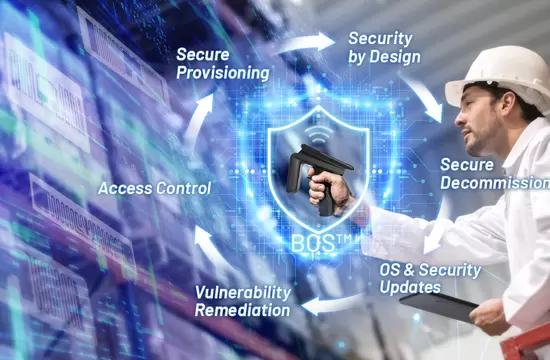
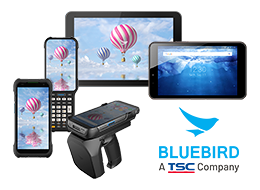
As more industries, from logistics and manufacturing to retail and healthcare, adopt increasingly more enterprise mobile computers (EMC), organizations face growing attack surfaces—not from the devices themselves, but from gaps in security and a lack of lifecycle management. Therefore, it is more important than ever to have a robust digital defense in place.
A robust security posture requires a holistic approach that accounts for the multitude of potential threats and attack surfaces. Crucially, this defense must integrate device lifecycle security to apply processes and tools throughout the entire journey of an EMC—from acquisition and deployment through active management and decommissioning. This is essential because it moves beyond fixing problems after they occur and instead proactively integrates security into every stage.
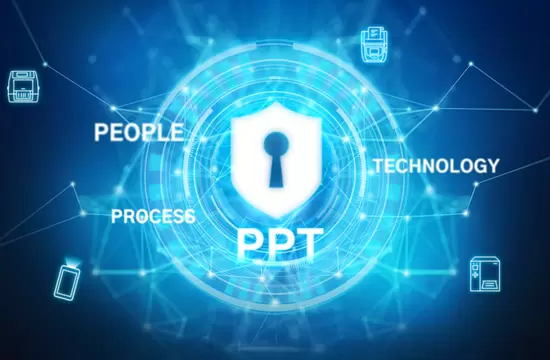
In our interconnected, digitalized world, cybersecurity isn't just an IT concern—it's a fundamental necessity. However, navigating through the multitude of security measures available and evolving threats can quickly become overwhelming. The good news is that the People, Process, and Technology (PPT) Framework can help you structure your thermal printer and enterprise mobile computer (EMC) security. That framework is built upon three pillars and is a holistic approach that extends beyond just the technical aspect of cybersecurity.